
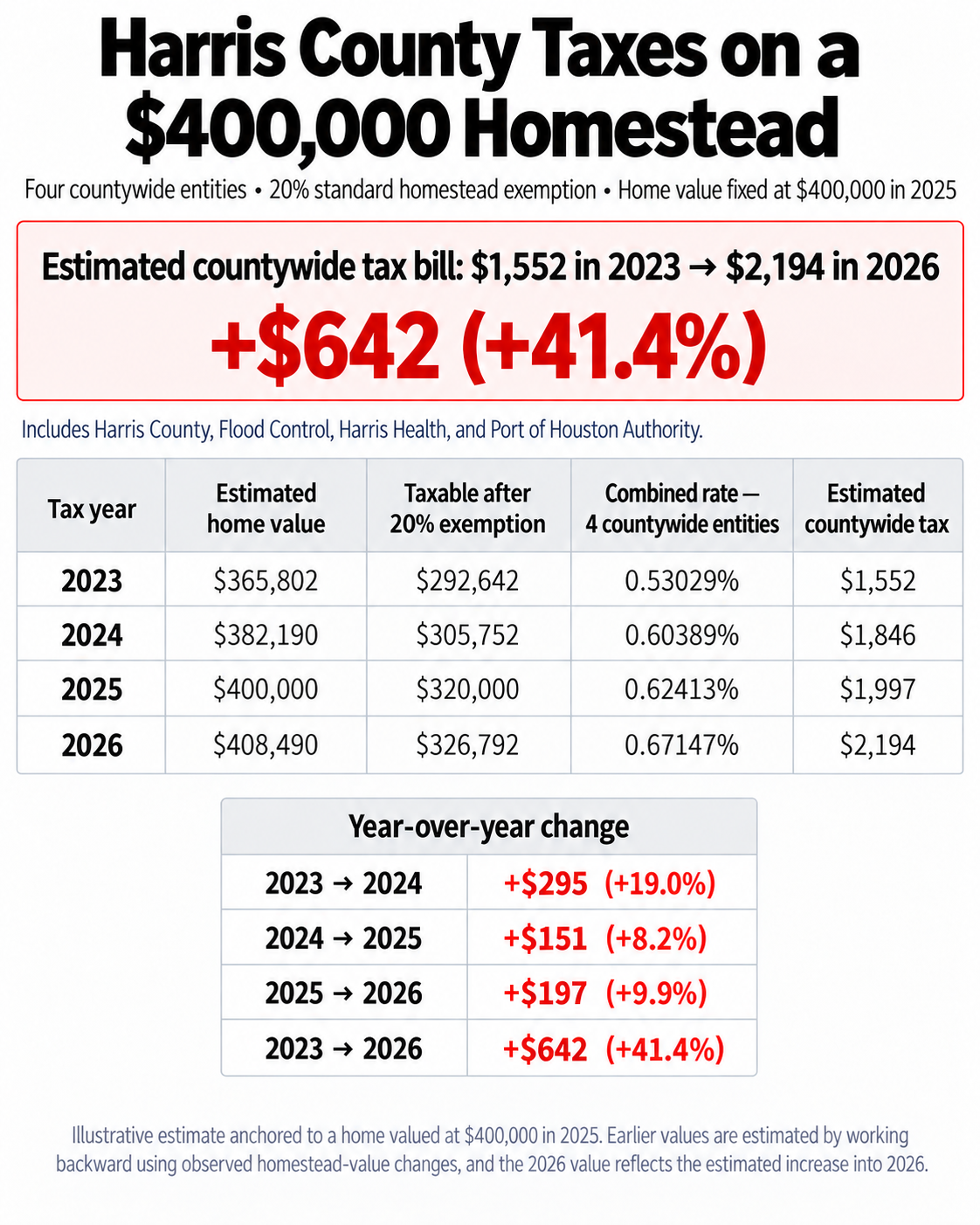
In defending their recent property tax increase, Commissioners have argued that the current increase only represents about a $190 increase for a homeowner with a $400,000 home. That statement is roughly accurate. However, it omits that the increase this year is the third year in a row that Harris County has increased its tax rate. The combined rate for all taxing entities in 2023 was about 53.5 cents per 100. The increase this year will raise that rate to 67.6 cents. That is a 26.3% increase in the tax rate in the last three years.
However, your tax bill is not just determined by the tax rate. It is also determined by how much HCAD raises or lowers the value of your home. Over the same period, HCAD has raised the value of our hypothetical $400,000 home by a little over 11%. Because these two increases compound, the total increase is just over 41%. For our hypothetical $400,000 homeowner, that is an increase of about $642 per year. That is about 3.5 times the increase in the County’s population and inflation index over that same period.1
The reason County taxes have increased so dramatically is that County spending has also increased. Over this same period, the County’s general fund budget alone increased by just under 10% annually – again, over three times the annual increase in population and inflation.
All totaled, the four property taxing entities have increased the annual take from their taxpayers by $1.5 billion since 2022, a 50% increase.
.png)
But property taxes are not the only boom to County revenues. It has dramatically ramped up its withdrawals of excess revenues from the Harris County Toll Road system, siphoning nearly $1.2 billion over the last four years. Harris Health (formerly known as the Harris County Hospital District) has received approximately $2.8 billion in supplemental Medicaid payments—far and away the most it has ever received in the past. And, of course, the County will receive hundreds of millions in federal flood control funds, assuming it does not screw up and miss the deadlines.
The plain facts are that Harris County officials have enjoyed an unprecedented glut of new revenue during a time when the region’s inflation rate ran well below the national average and the County’s population grew very modestly. It is simply inexcusable that they have not been able to live within their means.
Raising taxes on residents’ homes in the midst of a housing affordability crisis is something that should be taken very seriously and should be a last resort. Pondering such an increase deserves serious discussion and not flippant, misleading comparisons. Taxes rising by $190 may not sound like much, but that is a little like the old story about boiling a frog. Each increase is small enough that it may not seem alarming at the time, but in the end the frog is cooked – and homeowners are paying 41% more.
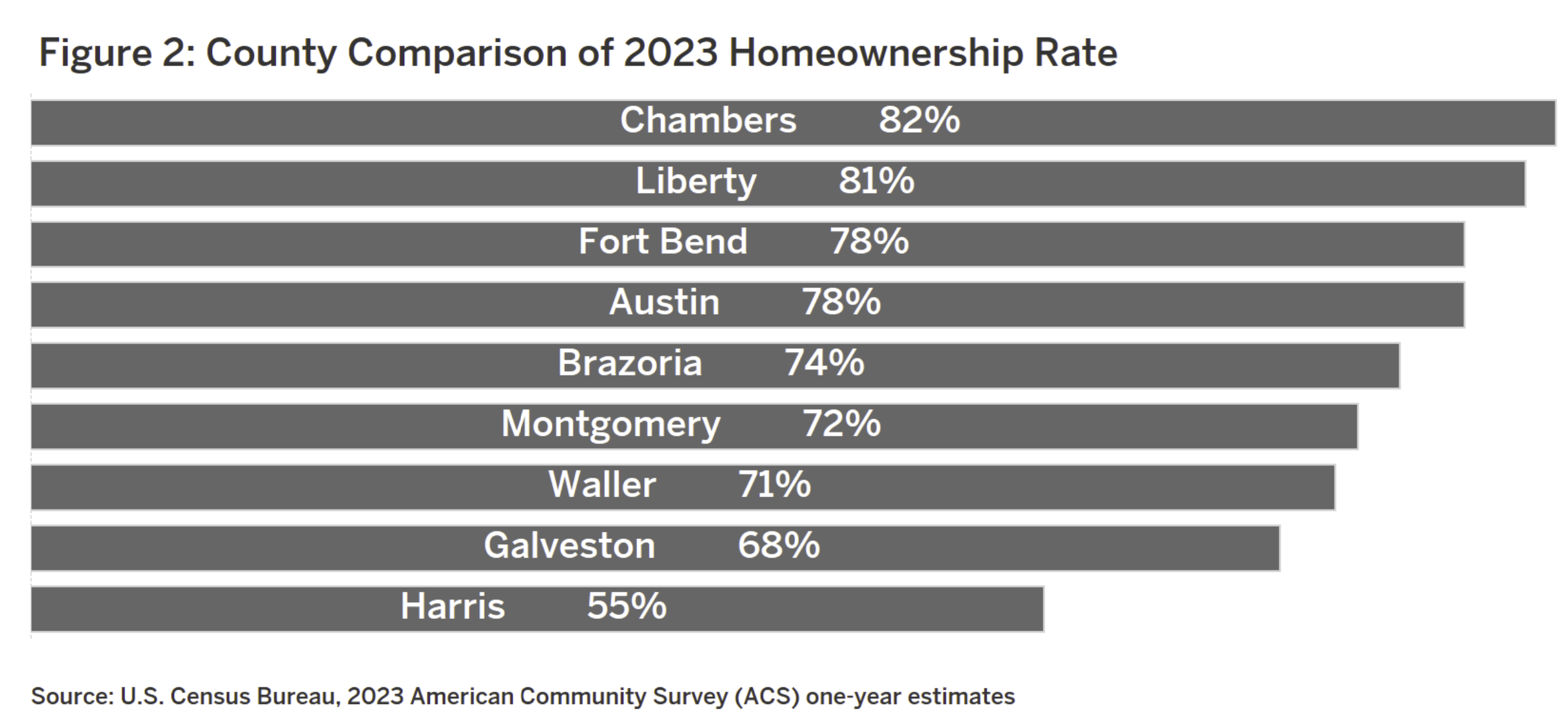
According to the Census Bureau, more than 300,000 U.S. residents moved out of Harris County than moved into it over the last decade. Last year that number hit an all-time high of just over 43,000. This Texas A&M Real Estate Center study last year found that about 65% of those leaving Harris County moved to a surrounding county and that “housing costs and quality of life” were among the principal motivations for the move. They also found that homeownership was far more prevalent in the surrounding counties.
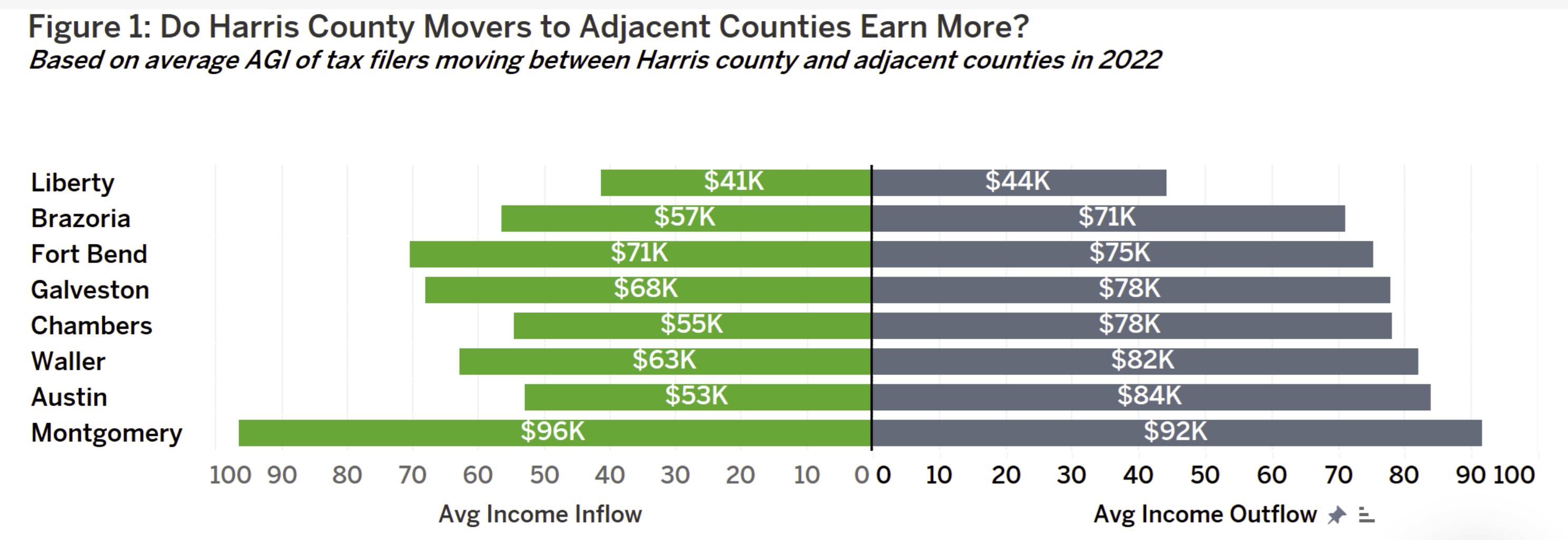
Harris County’s population has remained more or less stable because those moving out have been replaced by immigrants moving into the County from other countries. The study also found, however, that the international immigrants moving into the County had substantially lower incomes than those leaving the County.
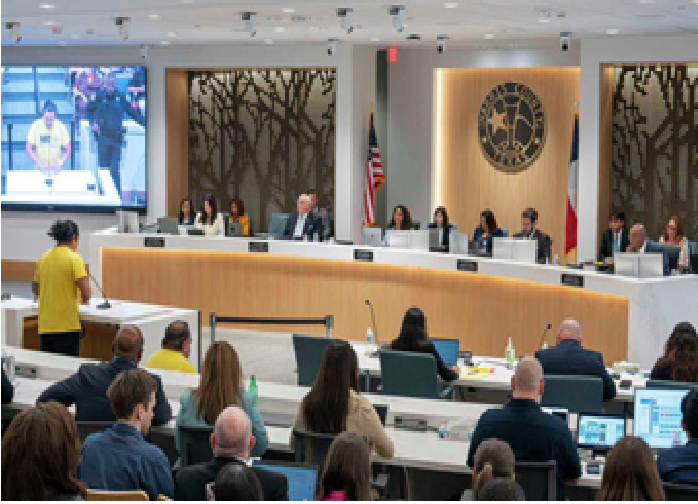
All of this makes the Commissioners’ decision to relentlessly increase property taxes to the highest levels in the County’s history even more baffling. Instead of attempting to stem the outflow of residents, they are making living in Harris County even more unaffordable by increasing the tax burden on middle-income families trying to own their own home.
People vote in two ways. They vote at the ballot box, but they also vote with their feet. On the latter tally, the vote is already in.
________________________________
Note 1 – Of course, the exact increase for any homeowner will depend on the value of their home and the increases in their HCAD valuation. This particular scenario is based on a statement made by Commissioner Briones that the average home of $400,000 would see a $193 increase in its tax bill. However, her calculations ignore that the average home will increase in value by 2% this year. Also, the median home in Harris County is actually slightly lower at about $345,000, which makes the percentage increase even higher. The Houston Chronicle has published a handy calculator to estimate what your county taxes will be based on your new HCAD valuation. Its average increase of $150 is before any change in valuation.
Left off this chart is that in 2022, while there was no increase in the tax rate, there was a dramatic increase in the appraised values of homes in Harris County. If that year is included, the total average increase over the last four years is 54%.


.png)